
UCLA Scientists Discover How to Guide Heat Like Light at Room Temperature
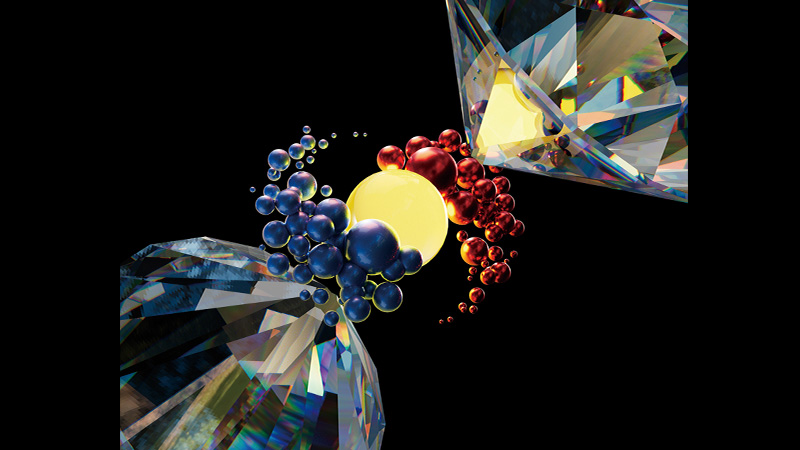
Scientists demonstrated that heat can move through a crystal in focused, wave-like rays at room temperature instead of spreading randomly. This breakthrough could revolutionize how heat is managed in next-generation computer chips and electronics.
Discovery of Heat Guidance
Scientists have demonstrated that heat can move through a crystal in focused, wave-like rays at room temperature instead of spreading randomly. This represents a fundamental breakthrough in thermal physics, as heat traditionally disperses in all directions rather than traveling in controlled paths.
How It Works
The UCLA research team engineered crystal structures that allow thermal energy to behave similarly to light rays. Instead of random diffusion, heat now follows predictable, directional paths through specific crystal lattices. The achievement operates at ambient temperatures, making it practical for real-world applications without requiring extreme cooling or heating systems.
Why It Matters
The breakthrough could make it possible to route heat around sensitive parts of next-generation chips, addressing one of the major challenges in computing. As processors become more powerful and compact, heat dissipation becomes increasingly critical. This controlled heat guidance could enable more efficient thermal management, potentially extending device lifespans and improving performance stability.
Future Applications
The implications extend beyond computers. Controlled heat routing could improve energy efficiency in manufacturing, enable better thermal management in spacecraft and satellites, and open new possibilities for materials science. Researchers are now working on scaling up these techniques and exploring how different crystal structures and materials might offer even greater control over thermal energy.