
Scientists Discover Single Cell's Remarkable Method for Building a Brain with 170 Billion Neurons
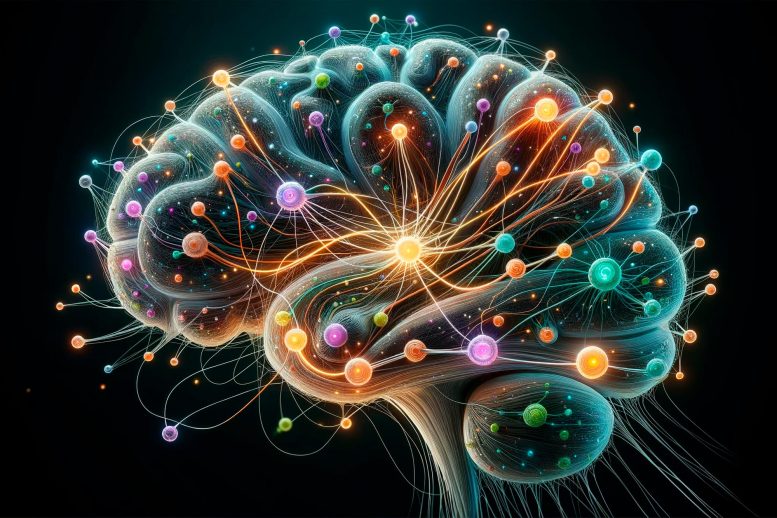
Researchers uncovered how a single cell constructs a brain with billions of precisely organized neurons by using the cell's lineage and family tree as a kind of positional map to guide development.
The Mystery of Neural Organization Solved
Scientists made a breakthrough discovering how a single cell builds a brain with billions of precisely organized neurons. Researchers suggest that brain cells use their lineage—their cellular family tree—as a kind of positional map. This finding fundamentally changes our understanding of how the brain self-organizes during development.
How the Brain Knows Where to Go
The human brain contains approximately 170 billion neurons, each forming thousands of connections with other neurons in a highly organized three-dimensional structure. For decades, scientists have puzzled over how this remarkable feat of organization occurs—how does a single fertilized cell give rise to such intricate neural architecture? The discovery that cells use their lineage history as a spatial reference represents a paradigm shift in developmental neurobiology.
Cellular Family Trees as Maps
Each neuron is born through a series of cell divisions, creating a "family tree" of cellular ancestry. Researchers found that neurons somehow retain information about their developmental lineage and use this genealogical information to determine their proper position within the developing brain. This elegant solution allows the brain to achieve remarkable precision without requiring an impossibly complex genetic blueprint specifying every neuron's exact location.
Broader Implications
Understanding this mechanism has profound implications for neuroscience and medicine. It may explain how the brain recovers from injury, guides the growth of neural connections during learning, and could inform strategies for treating neurodevelopmental disorders. The finding also demonstrates that biological systems exploit simple but powerful organizing principles—in this case, using history and ancestry—to achieve extraordinary complexity. Future research may reveal similar lineage-based mechanisms in other tissues and organs.