
Scientists Discover New Method to Detect Hidden Supermassive Black Hole Pairs in Space
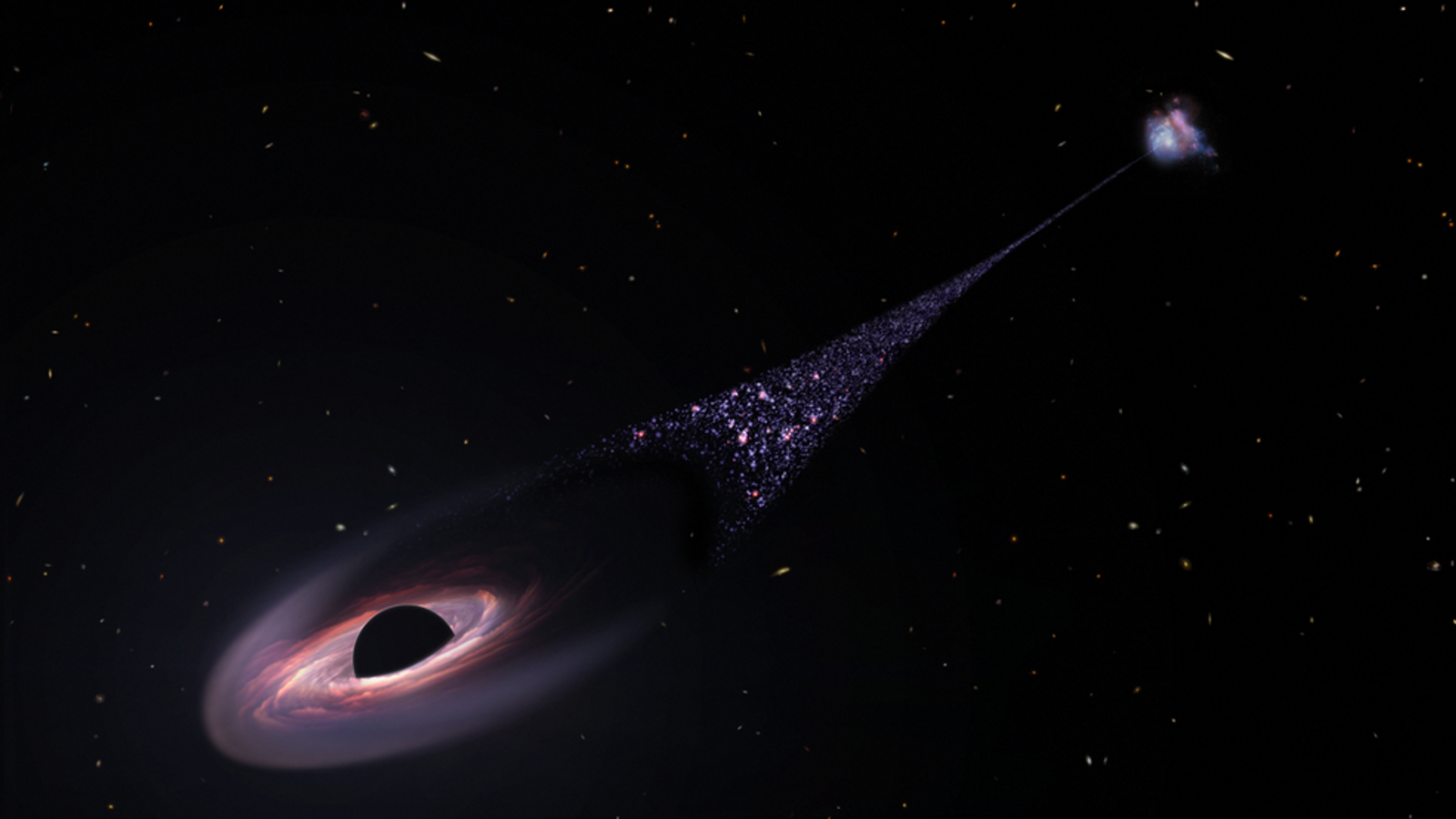
Astronomers have proposed a novel technique for finding closely bound supermassive black hole pairs by searching for stars that repeatedly brighten as their light is magnified by the black holes' gravity, potentially revealing previously hidden cosmic systems that could help understand galaxy evolution.
A New Strategy for Finding Hidden Binary Black Holes
Scientists have proposed a new method for finding tightly bound supermassive black hole pairs by searching for stars that flash repeatedly as their light is magnified by the black holes' gravity. The timing and brightness of these bursts could provide crucial clues about the location and properties of these extreme cosmic objects. This discovery offers astronomers a new tool in their quest to understand some of the universe's most violent and mysterious phenomena.
The Search for Binary Black Holes
Supermassive black hole pairs are thought to exist at the centers of many galaxies, particularly those that have undergone mergers. Despite their importance to understanding galaxy evolution, these tightly bound systems have been extremely difficult to detect directly. Scientists have proposed a new method for finding tightly bound supermassive black hole pairs by searching for stars that flash repeatedly as their light is magnified by the black holes' gravity. The timing and brightness of these bursts could reveal the gravitational signature of these elusive cosmic duos.
Gravitational Lensing as a Detection Method
The proposed technique harnesses gravitational lensing, where the intense gravity of black holes bends and magnifies light from background stars. When a star's light path passes near a binary black hole system, the varying gravitational fields can create distinctive patterns of brightness fluctuations. By monitoring these characteristic flashes across large sky surveys, astronomers can potentially identify systems that have remained hidden despite decades of observation with conventional methods.
Implications for Understanding Galactic Evolution
Discovering more binary supermassive black holes would provide crucial insights into how galaxies merge and evolve over cosmic time. Each discovery helps astronomers test theoretical models of galaxy formation and the role massive black holes play in controlling galactic evolution. The new detection method could open an entirely new window on these extreme environments.