
New AI Model Reveals How Neutron Star Mergers Forge Heavy Elements
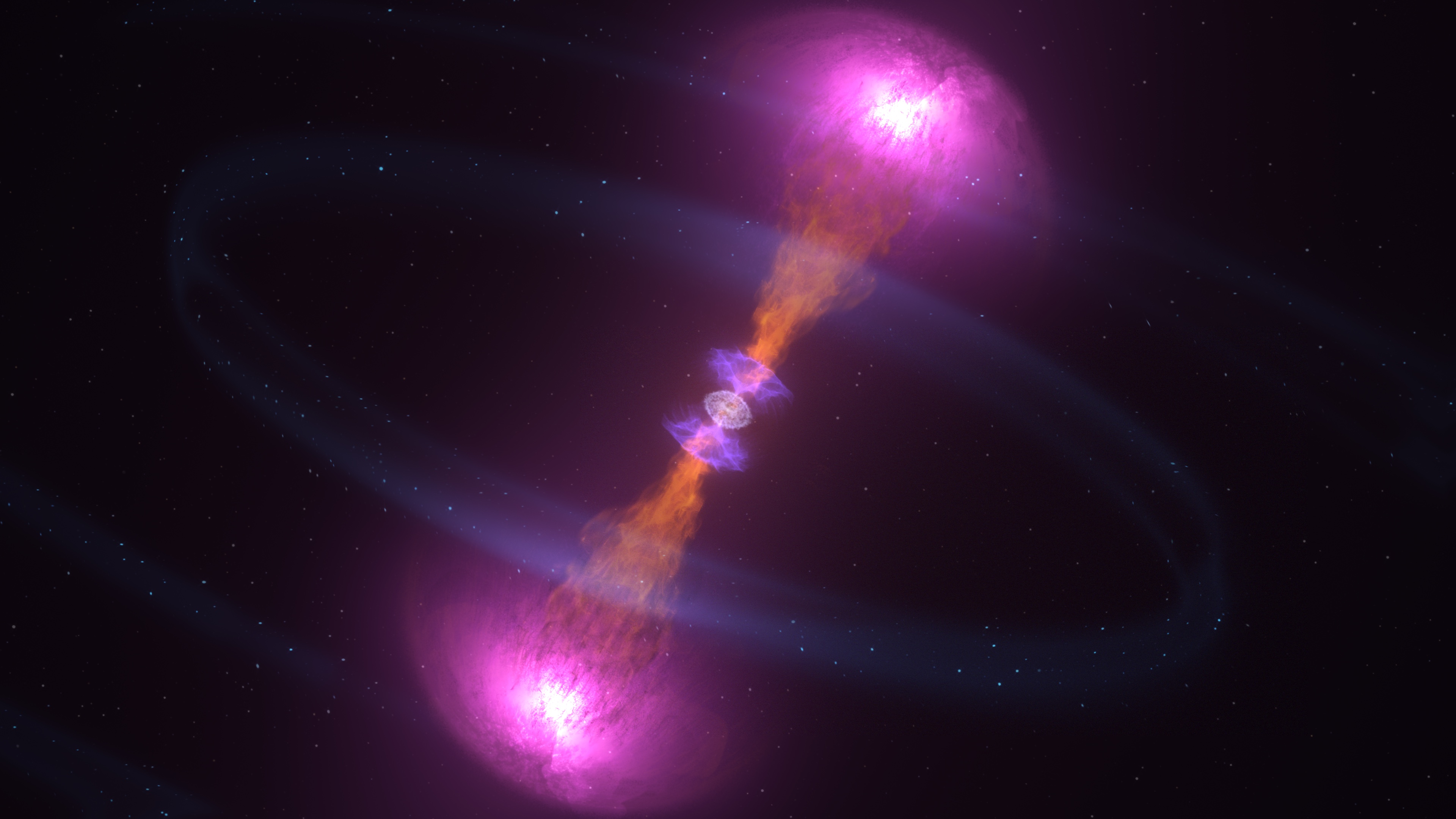
Researchers created an AI-based simulation that models how neutron star mergers produce the universe's heaviest elements much faster than before. The new tool could improve predictions of these powerful explosions and help understand cosmic astrophysics.
Breakthrough in Astrophysics Simulation
Researchers have created an AI-based simulation that makes it much faster to model how neutron star mergers produce many of the universe's heaviest elements. This represents a major advance in computational astrophysics, allowing scientists to simulate complex cosmic events with unprecedented speed and accuracy.
Why It Matters
Neutron star mergers are among the most violent events in the cosmos, producing extreme conditions that forge elements heavier than iron. Understanding these processes is fundamental to explaining where many of the periodic table's heaviest elements originate. The new tool could improve predictions of these powerful explosions while helping researchers better understand the mechanics behind gravitational waves and nucleosynthesis.
AI Accelerating Scientific Discovery
The use of machine learning and artificial intelligence to accelerate astronomical modeling is part of a broader trend in 2026. Scientists have combined machine learning with quantum physics to discover two new superconductors and create a much faster way to search for many more. This demonstrates how AI is becoming an indispensable tool across multiple scientific disciplines, from stellar physics to materials science.
Future Applications
As computational power and AI algorithms improve, scientists expect to simulate increasingly complex cosmic phenomena in real time. This could lead to better predictions during actual neutron star merger events, enhanced gravitational wave detection strategies, and deeper insights into the formation of heavy elements in the universe.