
NASA Announces Moon Base II and III Lunar Landing Missions with International Payloads
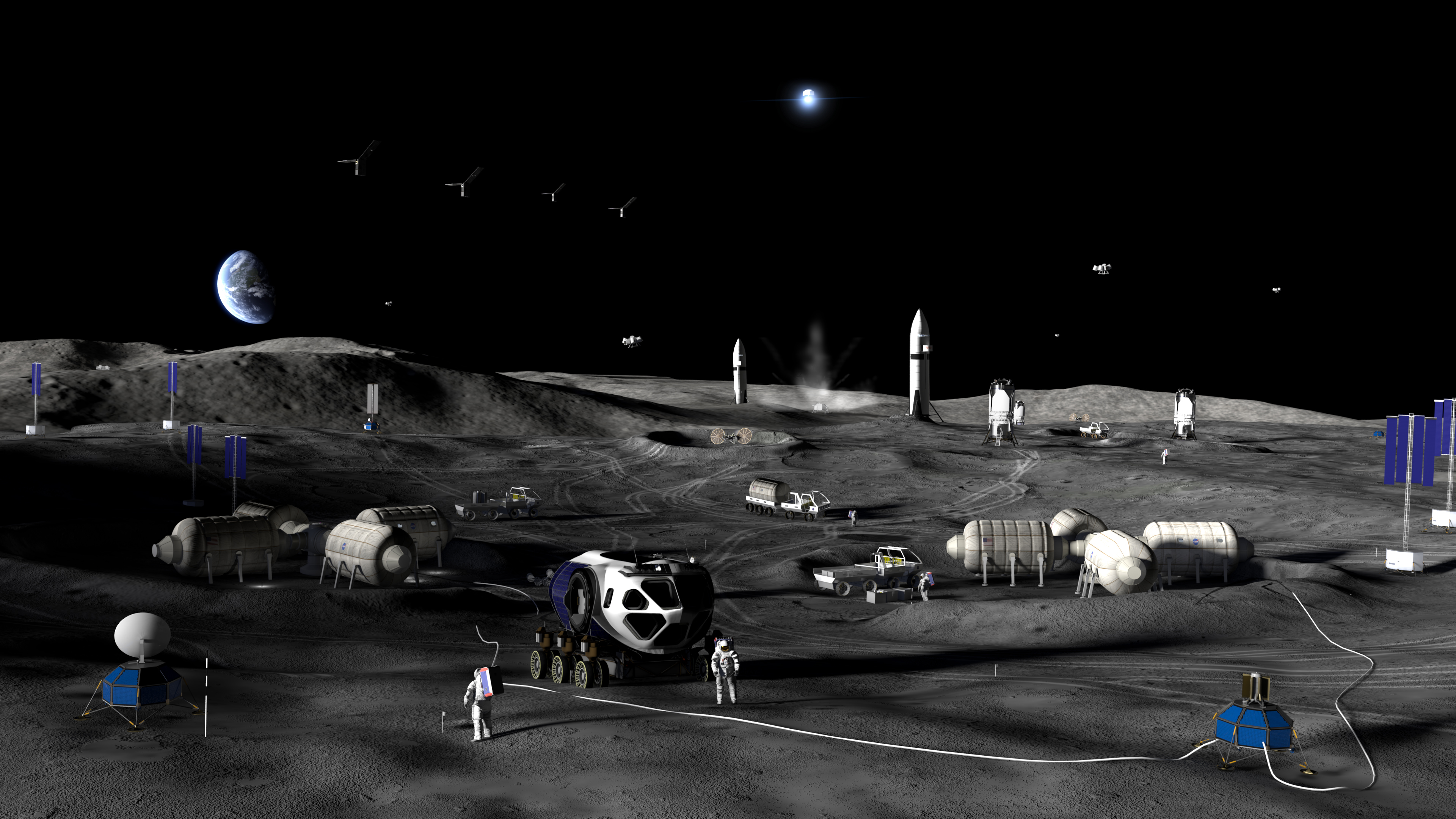
NASA revealed plans for Moon Base II and III missions that will deliver the largest commercial payloads ever to the lunar surface, marking a major step toward establishing a sustained human presence on the Moon.
Ambitious Lunar Infrastructure Plans
The Moon Base III landing will also deliver payloads from ESA and KASI, demonstrating that the future of lunar exploration is an international effort. Both Moon Base II and Moon Base III are targeted to launch before the end of 2026. These missions represent NASA's commitment to building the infrastructure needed for long-term human presence on the lunar surface.
Moon Base II Mission Details
Moon Base II will be the largest commercial payload delivered to the lunar surface ever, though in this Moon Base endeavor, we hope to be breaking records on nearly every mission. The Astrobotic Griffin lander will carry more than 500 kilograms of cargo, including Astrolab's FLIP rover. This mission will help mature the capabilities necessary to support future lunar terrain vehicles, autonomous operations, logistics, and especially astronaut mobility. This cargo includes critical equipment and scientific instruments needed to support eventual human operations.
Scientific Mission Objectives
The mission will deliver the first payload selected through NASA's PRISM initiative, a program that brings together universities, researchers, and industry through open competition to solve scientific questions. The anchor scientific mission is Lunar Vertex, which will study lunar swirls, one of the Moon's most intriguing mysteries. These unusual formations appear brighter than their surroundings, as portions of the lunar surface are somehow shielded from the effects of the solar wind. Understanding why they exist could improve our understanding of how the lunar environment evolves, how surface materials change over time, and how future infrastructure may perform in extreme conditions.
International Collaboration
Both missions feature international participation, with the European Space Agency (ESA) and the Korean Aerospace Research Institute (KASI) contributing scientific payloads. This collaborative approach demonstrates the global nature of lunar exploration and aligns with NASA's vision of establishing an enduring, sustainable human presence on the Moon that benefits all participating nations.