
Four-Winged Dinosaur Discovered in China May Be Missing Predator of Prehistoric Birds
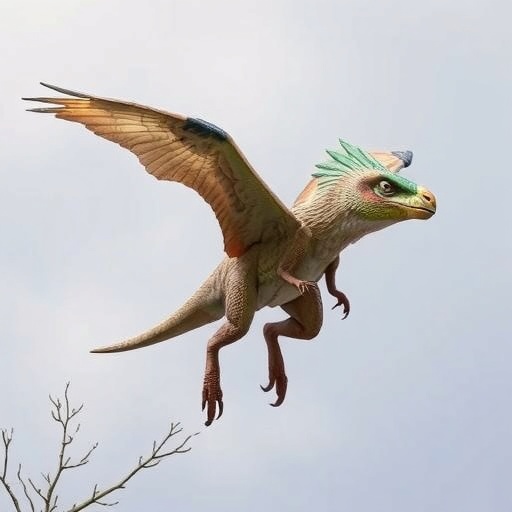
Scientists have identified a newly discovered feathered dinosaur called Jian changmaensis as a potential predator responsible for mysterious piles of crushed prehistoric bird bones found across China. This discovery fills a long-standing gap in understanding early avian evolution.
The Missing Predator
A newly discovered feathered dinosaur called Jian changmaensis may be the missing predator responsible for mysterious piles of crushed prehistoric bird bones in China. For decades, paleontologists have puzzled over bone beds containing the remains of early birds, many bearing distinctive crushing damage that suggested predation by an unknown animal. This discovery may finally explain those enigmatic fossil assemblages.
Anatomical Features
The four-winged structure of Jian changmaensis represents an unusual morphology that combines features of both dinosaurs and early birds. The presence of four functional wings is particularly significant, as it suggests a sophisticated aerial hunting capability that would have made this predator exceptionally effective at pursuing avian prey through complex environments. Such anatomy provides evolutionary insight into how predator-prey dynamics shaped early bird evolution.
Paleontological Significance
This discovery illuminates a critical period in evolutionary history when early birds were establishing themselves as a new form of vertebrate life. The predation pressure from Jian changmaensis and related species likely drove selection for specific flight adaptations and behavioral modifications in early birds. Understanding predator-prey relationships in the fossil record provides context for interpreting morphological changes observed across evolutionary time.
Wider Implications for Chinese Fossil Sites
China's fossil deposits have proven exceptionally rich sources of paleontological discoveries, particularly for understanding the dinosaur-to-bird transition. The identification of Jian changmaensis strengthens the picture of early Cretaceous ecosystems in East Asia, revealing a diverse array of feathered dinosaurs occupying various ecological niches. Future excavations may yield additional predators and prey species from these productive fossil sites.