
Blue Origin's New Glenn Rocket Explodes During Test at Cape Canaveral
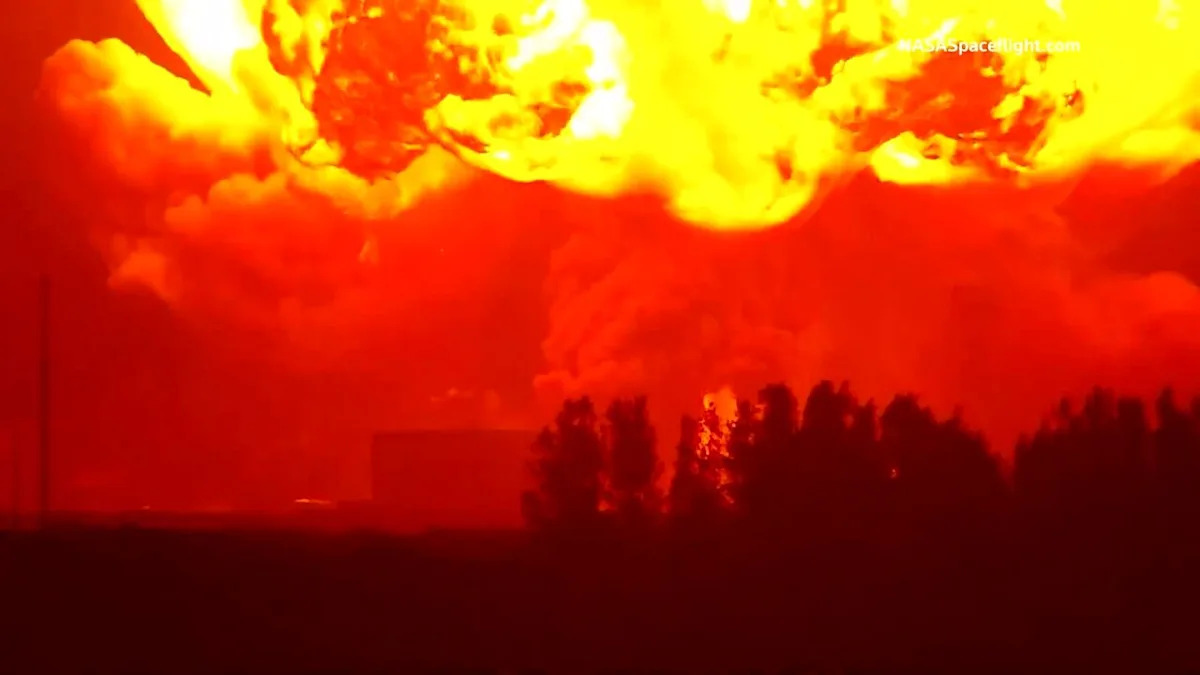
Jeff Bezos's Blue Origin suffered a major setback when its New Glenn rocket exploded during a hot-fire engine test Thursday night at Cape Canaveral Space Force Station in Florida. The 322-foot-tall rocket experienced an anomaly and was completely destroyed, with no injuries reported but significant damage to the launch pad.
The Explosion
An uncrewed rocket belonging to Jeff Bezos's Blue Origin exploded into a massive fireball Thursday night during a launchpad test, with the 322-foot-tall New Glenn rocket igniting on the pad at Cape Canaveral, Fla., at around 9 p.m. local time, before erupting into a bright orange ball of fire, engulfing the surrounding area and shaking nearby homes. Blue Origin confirmed it had experienced an "anomaly" during a so-called hot-fire test, which is when a rocket is fired up while remaining anchored to the ground. Bezos confirmed that all personnel were safe and accounted for.
Impact on Blue Origin's Plans
Blue Origin was gearing up for the New Glenn rocket's fourth launch in June to put dozens of Amazon "Leo" internet satellites into Earth's low orbit — competing with Musk's Starlink network. The satellites were not on the rocket at the time of the explosion. The destruction of the launch facility poses a significant delay to these plans.
Bezos's Response
"It's too early to know the root cause but we're already working to find it," Bezos said via X. "Very rough day, but we'll rebuild whatever needs rebuilding and get back to flying." Astrophysicist Maggie Lieu at the University of Nottingham in the U.K., said the incident was a "massive setback," coming a week after the FAA grounding had been lifted.
Broader Industry Context
The explosion is the latest setback for Bezos's Blue Origin in the company's ongoing space race rivalry with Musk's SpaceX, as both companies want to dominate commercial space travel and have been selected by NASA to eventually land astronauts on the moon.